HOWS Barcelona kicks off with a shared challenge: more affordable housing, regulation and funding.
The first day of the international congress has addressed the challenges of accessing housing and the solutions being driven by cities. The event has highlighted new financing tools, rental market regulation, cooperative housing models and construction innovation.
HOWS Barcelona – Housing World Summit officially opened its first edition this Tuesday, 3 November, at the Gran Via venue of Fira de Barcelona, as part of the Smart City Expo World Congress. The day brought together international experiences and policies developed in Barcelona to address a housing crisis that particularly affects young people, low-income families and essential workers.
The main consensus was that building more homes is necessary, but not enough without measures to ensure affordability, regulate markets and guarantee the continuity of public policies.
Housing, an institutional and European priority
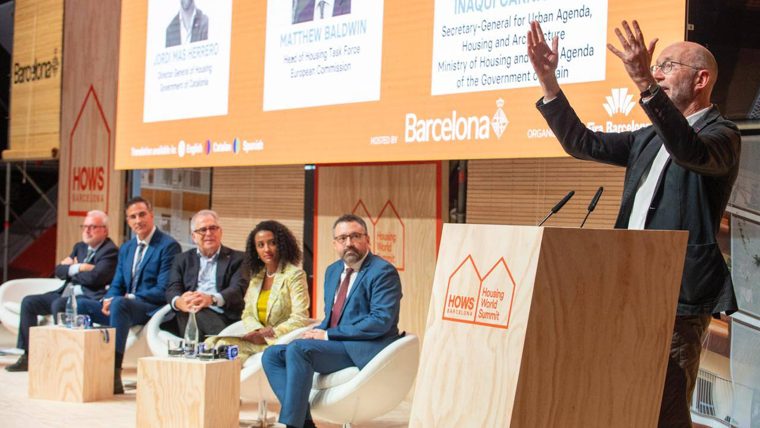
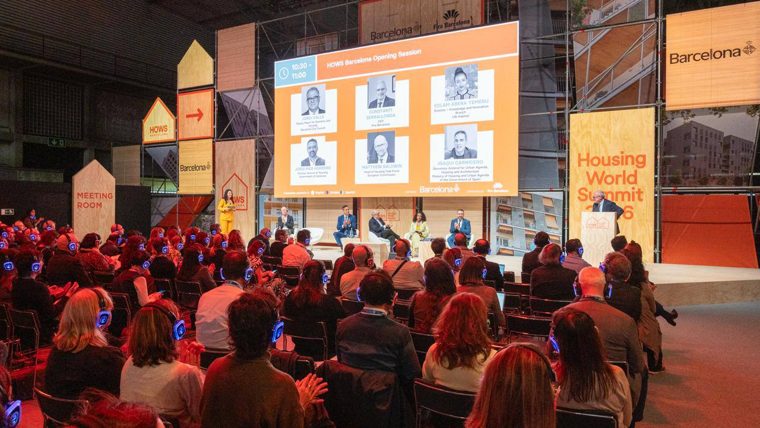
The opening ceremony brought together Jordi Valls, Deputy Mayor for Economy and Housing of Barcelona City Council; Jordi Mas, Director General of Housing of the Government of Catalonia; Iñaqui Carnicero, Secretary General for Urban Agenda, Housing and Architecture of the Government of Spain; Matthew Baldwin, from the European Commission; Edlam Abera Yemeru, from UN-Habitat; and Constantí Serrallonga, CEO of Fira de Barcelona.
Valls placed access to housing at the heart of the future of cities and highlighted the importance of sharing solutions between public administrations. Mas emphasised the need to expand the supply of affordable housing, protect tenants and regulate tourist accommodation. Carnicero advocated for an approach that also incorporates architectural quality, sustainability and accessibility.
In his presentation, Baldwin outlined European housing priorities and estimated additional investment needs at around €150 billion per year. Given the scale of this challenge, he proposed mobilising stable, non-speculative private capital, strengthening European financial instruments and providing municipalities with greater legal certainty to regulate short-term rentals.
Technology to make housing needs visible
Edlam Abera Yemeru presented the potential of artificial intelligence and digital mapping to improve urban planning, particularly in informal settlements.
One of the examples highlighted was Cape Town, where these technologies have made it possible to add more than 822,000 additional structures to municipal information systems. She also presented initiatives in Central America and Namibia, where identifying homes missing from official records helps improve the planning of services and investments.
Her presentation linked digital transformation to a specific social objective: having more comprehensive data to better guide housing policies.
Regulating the market to tackle inequality
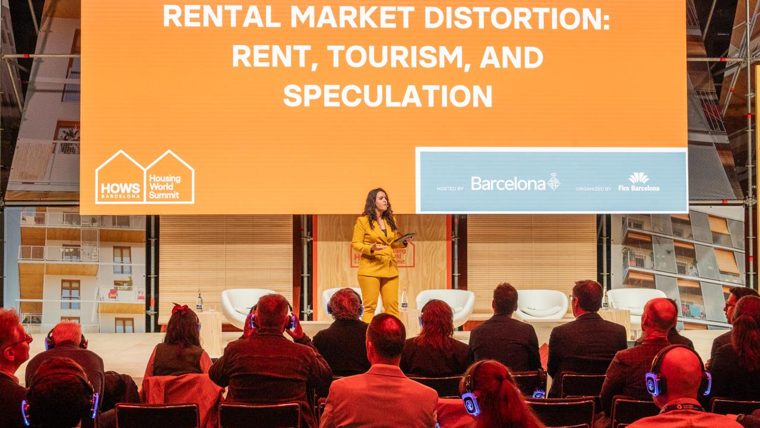
Land availability, speculation and pressure from tourism-related uses were among the topics discussed in relation to imbalances in the housing market.
Budapest Mayor Gergely Karácsony warned that the housing crisis is deepening inequalities between generations, particularly between those who have access to family wealth and those who do not. He also called for greater European resources and policies that combine increasing housing supply with preventing homelessness.
In the subsequent debate, Barbara Steenbergen, Irene Escorihuela, Javier Burón and Aleix Arcarons analysed the gap between wages and housing prices, as well as the role of private market regulation.
Barcelona shared its experience with rent control measures, introduced in March 2024. In this context, data from the Barcelona Metropolitan Housing Observatory show that the average rent for new contracts fell from €1,193 per month in the first quarter of 2024 to €1,161 in the fourth quarter of 2025, a nominal decrease of 2.7%. Despite this moderation in prices, housing affordability remains a challenge for many households.
Cooperatives and shared living: alternatives to the conventional housing market
The session on innovative models, moderated by Eduard Cabré, Housing Policy Adviser at IMHAB, explored residential alternatives based on collective management and non-profit principles.
Zita Pels, Deputy Mayor for Housing of Amsterdam, presented the Dutch tradition of social housing and the importance of protecting this housing stock through stable regulations. Eduardo Gutiérrez, from Provivienda, stressed that Spain needs to strengthen social housing providers and develop policies that extend beyond electoral cycles.
The experiences presented included German rental housing cooperatives, explained by Guido Schwarzendahl, and the Catalan right-of-use cooperative housing model developed by Sostre Cívic, presented by Amaia Belastegui. This model provides access to stable housing without requiring individual ownership.
Dunia Rosello, from Suara Serveis, presented an intergenerational living initiative that connects older people with young people looking for affordable housing. The model addresses housing needs while helping prevent unwanted loneliness. Pedro Muntaner, from Grup SALAS, completed the debate by exploring the opportunities offered by public-private partnerships and industrialised construction to increase housing supply.
Industrialisation and renovation to expand and improve housing stock
Winnie Wing Yin Ho, Secretary for Housing of the Government of Hong Kong, presented the experience of integrated modular construction in public housing, using off-site manufactured components alongside robotics and digital systems.
The debate with Licinio Alfaro, Mar Sierra, Xavier Vilajoana and Jose Lucas Masero explored how these processes can be scaled up, with the aim of reducing construction times and improving building efficiency.
The day also included a session on renovation and urban regeneration in Barcelona. Àlex Montes, Managing Director of Foment de Ciutat, presented the intervention model for highly complex buildings, where conventional subsidies are often insufficient.
The session also featured Anna Font, Head of Renovation at Barcelona City Council and IMHAB, as well as neighbourhood representatives, property managers and municipal officials. The discussion focused on the need to combine technical resources, funding and social support to overcome the difficulties faced by the most vulnerable communities and promote the renovation of existing housing stock.
From international experiences to local solutions
The first day highlighted three recurring ideas: the need to combine housing supply and regulation, the importance of securing long-term investment and stable policies, and the potential of innovation to improve both construction and the management of existing housing stock.
Experiences from Amsterdam, Budapest and Hong Kong, together with European cooperative models, were presented alongside Catalan initiatives in right-of-use housing, intergenerational living and urban renovation. Different approaches sharing the same goal: expanding access to housing and preserving its social function.
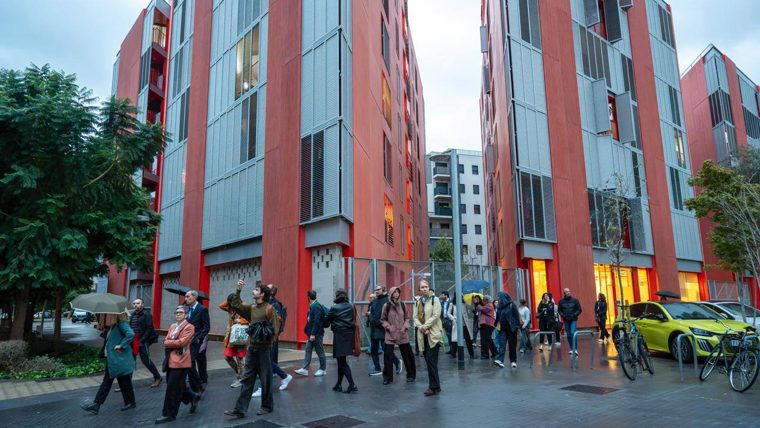
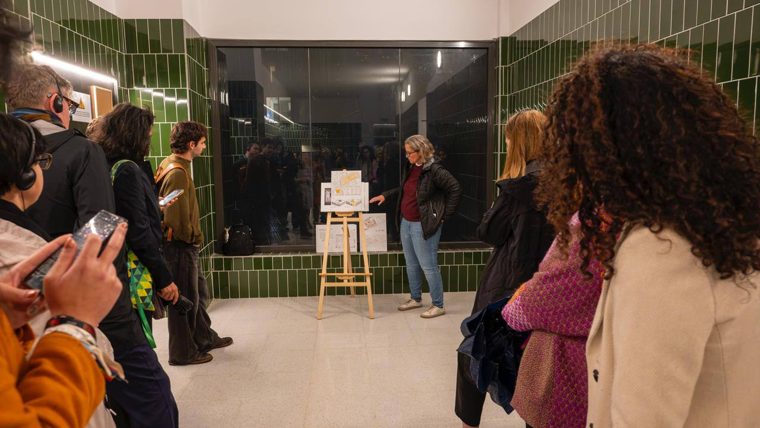
Alongside the congress, a guided tour of Marina del Prat Vermell also took place. The visit offered an insight into the area's urban transformation and the challenges associated with affordable housing.
HOWS Barcelona will continue on 4 and 5 November with further sessions on housing policies and international experiences.
Consult the full HOWS Barcelona programme.